VGP Polishing Process
New machine concept for polishing large high-performance optics
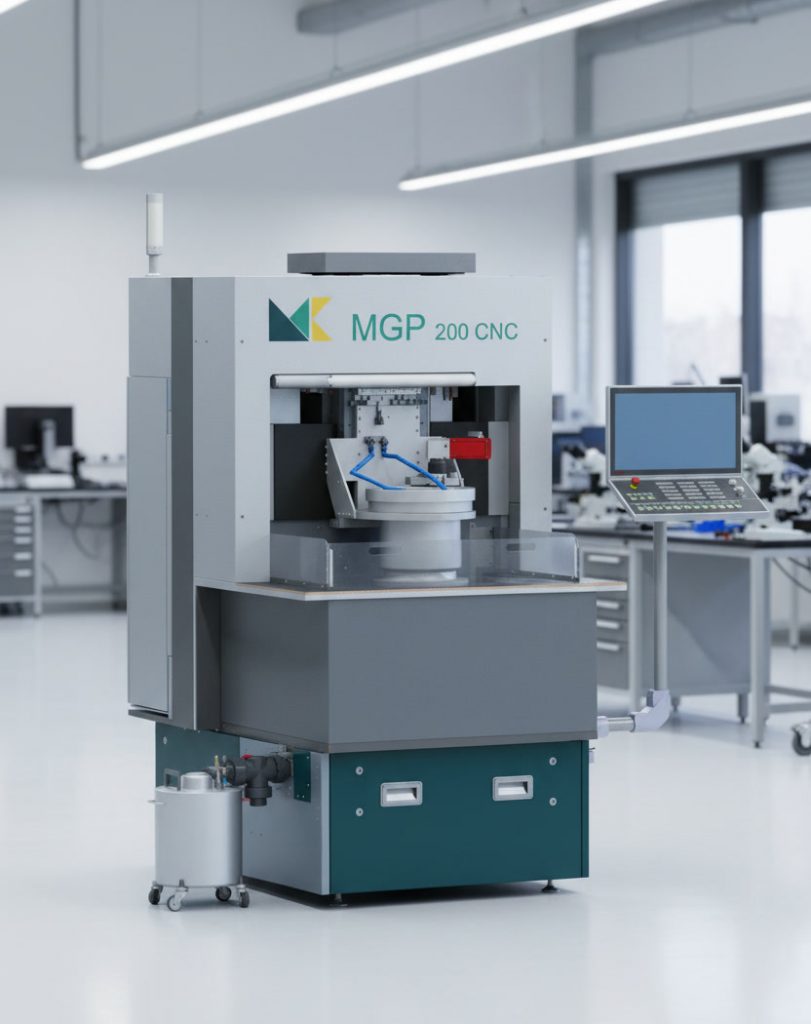
The VGP process (Vertical Gravity Polishing) is a newly developed polishing method for the automated processing of large optical components. It expands on the established principle of membrane polishing by incorporating a cage guide: the lens is guided by a cage without stress and pressed onto the tool solely by its own gravitational force. The back of the lens remains fully accessible, allowing for targeted shape manipulation through locally applied additional pressure. This open kinematics create new degrees of freedom, enabling precise control of material removal across the entire surface. The process works with a wide variety of suspensions and is designed for components up to 300 mm in diameter – scalable to a theoretical diameter of 1.5 m. Several patents protect both the machine kinematics and the methods for applying pressure via the open back.
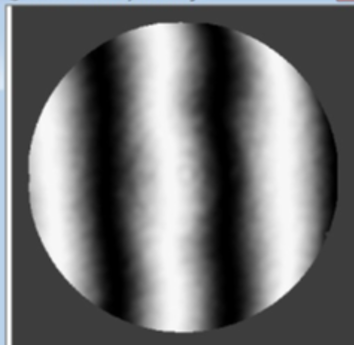
Less than 30 nm PV
Accuracy
50 – 300 mm
Diameter
Quartz, BK 7, Silicon Carbide etc.
Materials
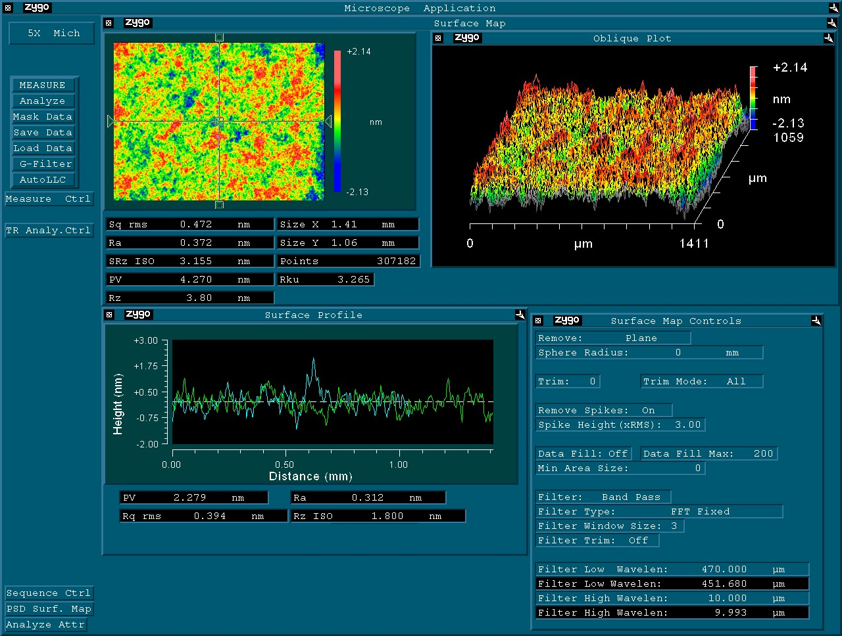
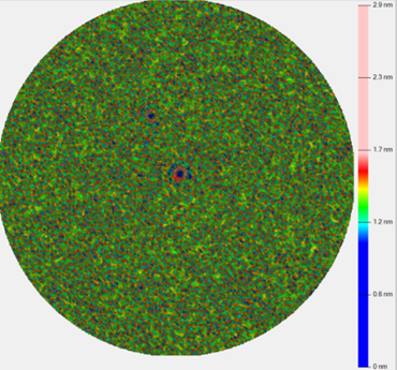
Less than 0.5 nm RMS
Roughness
01
Starting point
Challenge
The production of large optics is under increasing pressure: rising quantities, higher accuracy requirements, and tight manufacturing tolerances are met by a growing shortage of experienced skilled workers. Classic polishing methods for large diameters are highly manual and therefore only partially automatable. This limits both economic viability and reproducibility – and makes scaling up production increasingly difficult.
02
OUR APPROACH
Solution
The VGP process addresses these challenges through a fundamentally new machine kinematics. The stress-free cage guide and access to the rear of the lens open up intervention possibilities that were not possible with previous systems: form deviations can be corrected in a targeted and localised manner, the process is fully automatable and repeatable. This reduces the dependence on specialised personnel while increasing accuracy and throughput.
03
Added value
Advantages
✓
Automatisable Reproducible processes instead of manual polishing — independent of the availability of specialised skilled workers.
✓
Scalable up to 1 m diameter: A process for the complete spectrum from precision optics to large optics.
✓
Targeted shape correction Local pressure application through the open back enables accuracies that are unattainable with classical methods.
✓
Flexible in use Compatible with a wide range of suspensions — adaptable to material and requirements.
✓
Patented: Multiple patents on kinematics and pressure application secure the technological lead.
Insights
Project images